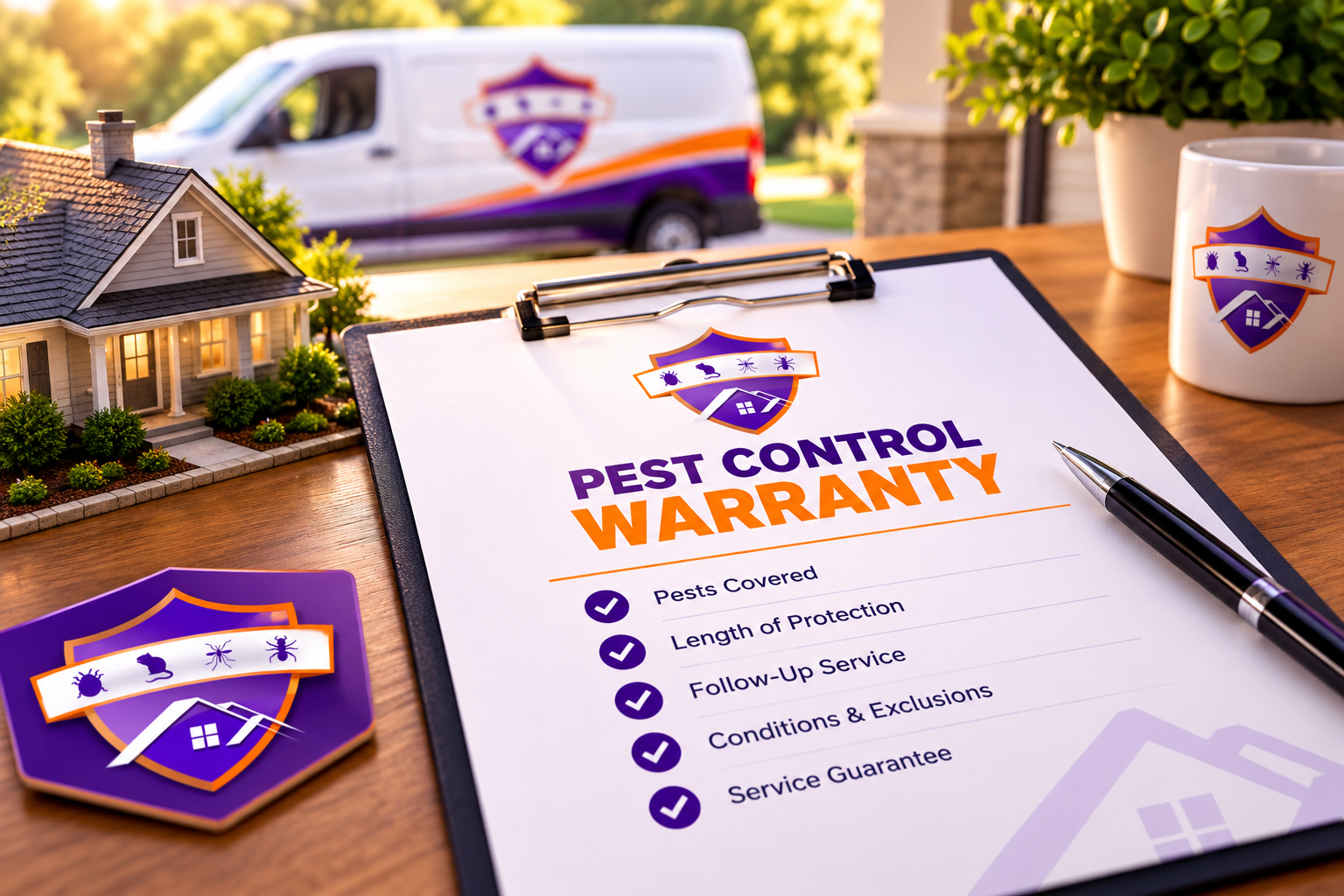
A pest control warranty should give homeowners a clear understanding of what happens after the initial service. It should explain what pests are covered, how long protection lasts, whether follow-up is included, and what conditions may affect eligibility for re-service. Clear terms matter because pest activity can change with weather, moisture, landscaping, repairs, sanitation, and new entry points.
Our team views a warranty as part of an ongoing service relationship, not simply a promise printed on an invoice. The strongest guarantees are specific enough to set realistic expectations and flexible enough to support follow-up when pests return. For companies serving homes with ants, cockroaches, mosquitoes, rodents, spiders, termites, and other common pests, the warranty should match the actual service performed and the biology of the pest being treated.
A Good Warranty Should Clearly Define Re-Service Terms
The first question to ask is what happens if pest activity continues after treatment. A useful pest control warranty should explain whether the company will return, how soon re-service can be requested, and whether that follow-up carries an additional charge. DAPS currently states that if pests return after treatment, the company will come back to re-service at no additional cost.
That type of language gives homeowners a practical next step instead of leaving them unsure whether continued activity means starting over. Regular follow-up also works best when technicians can compare new evidence with earlier findings. Our guide to regular pest monitoring explains how recurring inspections help track changing conditions and determine whether earlier treatment is still working.
A warranty should clearly address:
- Which pests and treatment areas are covered
- How long the re-service period remains active
- Whether return visits require an additional fee
- What signs should be reported between scheduled visits
- How homeowners should request follow-up service
- Whether coverage changes if the original pest problem shifts location
Specific terms help both sides understand what the guarantee actually provides.
Coverage Should Match the Pest, Treatment, and Property Conditions
Not every pest-control service can carry identical warranty terms. Ants, rodents, termites, mosquitoes, cockroaches, and spiders behave differently, and some treatments depend on monitoring, exclusion, bait maintenance, moisture correction, or recurring visits. A meaningful warranty should reflect the service plan instead of using the same promise for every situation.
Our team also looks at environmental conditions that can affect results. New plumbing leaks, landscaping changes, open food sources, construction, damaged screens, or reopened entry points can create fresh pest pressure after treatment. If those conditions affect warranty coverage, the limits should be explained before service begins.
Important questions include:
- Whether recurring pests require scheduled maintenance for coverage
- Whether termite or rodent services have separate follow-up terms
- How new entry points or structural changes affect protection
- Whether sanitation or moisture conditions must be corrected
- Which parts of the property are included in the warranty
- What exclusions apply when a new infestation develops
Clear limits do not weaken a warranty. They make it more useful by showing exactly what the company is responsible for and what conditions may require a new evaluation.
Follow-Up and Coordination Should Support Long-Term Protection
A warranty is most valuable when it is connected to inspection, documentation, and follow-up. Pest activity can return for a different reason than the original problem, so technicians need enough information to determine whether the warranty applies or whether a new condition has developed. Our team may compare current signs with earlier service records, treated zones, monitoring devices, and property changes.
Other home services can also affect pest-control results. Plumbing work, restoration, deep cleaning, landscaping, or construction may disturb treated areas or remove evidence technicians rely on. Our article on coordinated home services explains why scheduling and communication matter when multiple contractors are working around the same areas.
A strong warranty process may include:
- Recording treatment locations and service findings
- Rechecking earlier pest hot spots during follow-up
- Reviewing repairs or maintenance completed after treatment
- Inspecting new moisture, access, or sanitation concerns
- Adjusting treatment when pest pressure shifts
- Documenting whether the issue falls within existing coverage
This makes the warranty part of a long-term prevention strategy rather than a one-time customer-service promise.
Homeowners should also ask whether the guarantee applies only to the original pest or to broader recurring service. A company that offers a re-service promise should explain how that promise works with scheduled maintenance, seasonal pest pressure, and new infestations. Written terms help reduce confusion about timing, exclusions, and expectations.
The best pest control warranty is not the one with the most dramatic wording. It clearly explains the scope of coverage, provides a dependable follow-up process, and supports treatment with monitoring and accurate documentation. That combination helps homeowners understand what protection they are receiving and what steps to take if pest activity returns.
Choose Pest Protection With Clear Follow-Through
If you want pest service backed by clear follow-up and a stated re-service guarantee, contact DAPS Services for professional inspection, treatment, monitoring, and long-term pest prevention.