
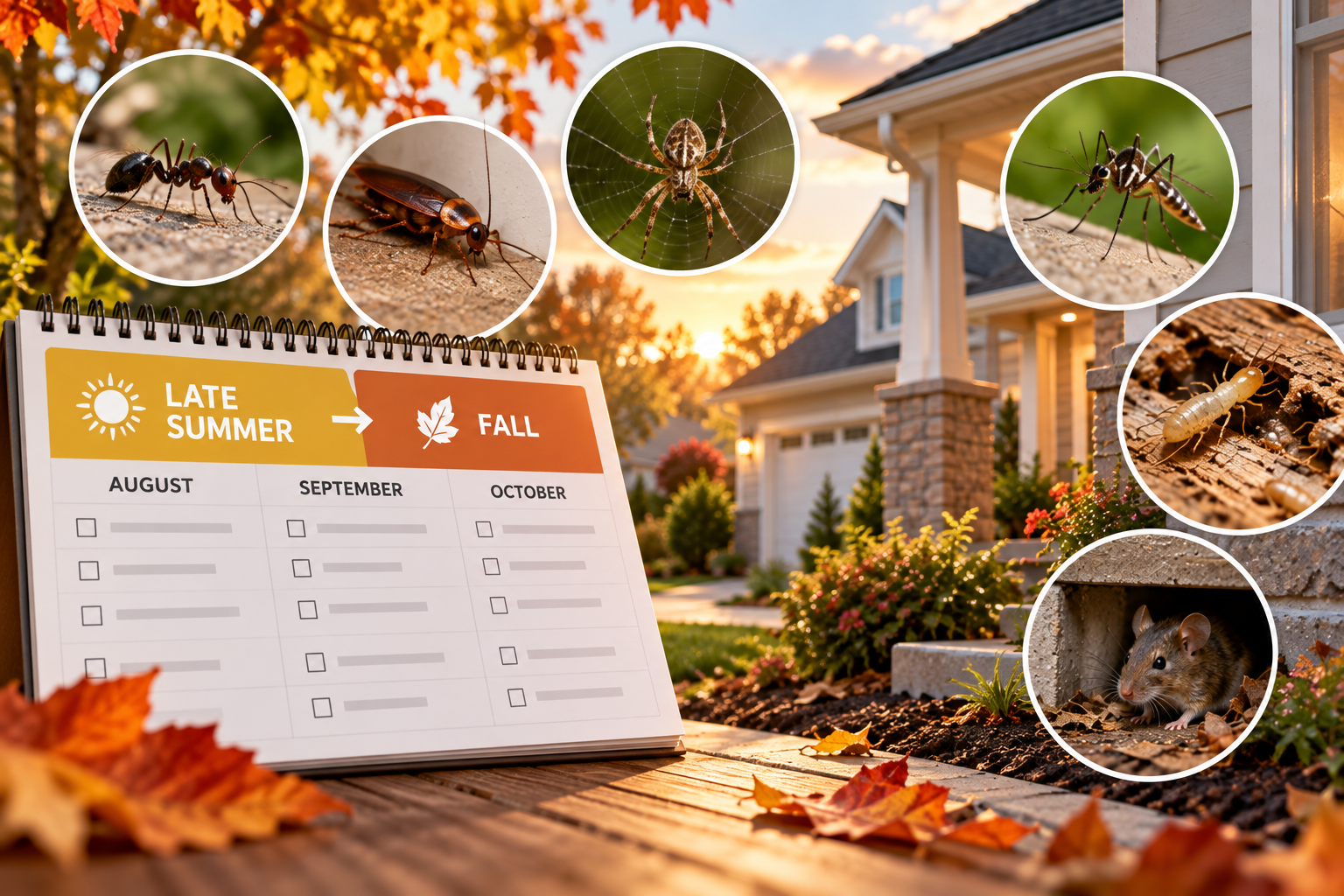
Late summer is not the end of pest season in McDonough and surrounding areas. Warm temperatures, humidity, rainfall, and changing food sources can keep ants, cockroaches, spiders, mosquitoes, rodents, termites, and other common pests active while seasonal conditions begin to shift. A useful pest calendar helps homeowners know what to watch for before fall arrives.
Professional pest control works best when treatment follows real conditions rather than a fixed date. Inspection, timing, property preparation, and follow-up all matter. As summer winds down, the goal is to identify which pests are still active, which ones may start moving toward shelter, and which maintenance tasks should be coordinated before cooler weather changes activity patterns.

Late Summer: Watch For High Outdoor Activity And Indoor Spillover
August and early September can still bring strong pest pressure. Heat and moisture continue to support insects outdoors, while food, shade, and water around the property can draw them closer to doors, foundations, patios, and garages.
Key late-summer concerns include:
- Ant trails near kitchens, patios, foundations, and irrigation zones
- Cockroach activity around moisture, drains, garages, and utility areas
- Mosquito pressure near standing water, shaded vegetation, and lawn edges
- Spider activity where insects gather near lights, eaves, and landscaping
- Rodent signs around garages, storage areas, rooflines, and food sources
- Termite risk where soil moisture and structural conditions remain favorable
A late-summer pest calendar should also account for other home projects. If cleaning, plumbing, landscaping, restoration, or appliance work is scheduled, coordinate the timing so fresh treatments are not disturbed. Guidance on service coordination shows why sharing upcoming work with a technician can help protect treatment effectiveness.
Early Fall: Prepare The Property Before Pressure Shifts
As nights become cooler, pest behavior can change even while daytime temperatures remain warm. Rodents may begin testing sheltered areas, and insects may move toward structures where temperature and moisture are more stable. This is a good time to review the property before activity becomes less visible.
Useful pre-fall preparation includes:
- Clearing access to kitchens, garages, utility areas, and other problem zones
- Moving stored items away from walls when technicians need inspection access
- Reporting recent sightings, droppings, noises, or recurring pest routes
- Correcting leaks or standing water that continue supporting pest activity
- Checking door sweeps, vents, utility gaps, and other common entry points
- Scheduling service before major cleaning or renovation changes treatment areas
Preparation makes a professional visit more efficient because technicians can inspect the places most likely to show useful evidence. The requested guidance on technician preparation also reinforces the value of creating access, sharing recent pest observations, and coordinating household activity before treatment begins. Clear preparation can also reduce delays, prevent unnecessary movement of treated items, and help the technician spend more time evaluating active pest conditions.
A well-prepared property gives professionals a clearer picture of what is active now and what may become a problem next as fall approaches.
Ongoing Follow-Up: Adjust The Calendar As Conditions Change
A pest calendar should not end with one appointment. Georgia’s warm, humid climate allows pests to remain active for long periods, so follow-up helps confirm whether treatment is working and whether seasonal pressure has shifted.
Ongoing monitoring may include:
- Rechecking areas where ants, cockroaches, or spiders were previously active
- Reviewing traps, bait stations, or rodent travel routes
- Inspecting moisture-prone areas after rain or irrigation changes
- Watching for fresh entry gaps around doors, vents, and utility penetrations
- Adjusting treatment frequency when pest pressure remains high
- Scheduling monthly, bi-monthly, or quarterly service when conditions warrant it
Professional pest control plans are most effective when they remain flexible. A home with recurring mosquito or cockroach pressure may need a different schedule from a property with occasional ant activity. Rodent or termite concerns may also require specialized inspection and follow-up rather than general treatment alone.
That is why a pest calendar should be treated as a planning tool, not a rigid checklist. Weather, landscaping, neighboring properties, moisture, food availability, and building condition can all change from one month to the next.
Late summer is also a good time to document what happened during the season. Note where pests appeared, what conditions were present, and whether certain areas improved after treatment. This information helps professionals compare patterns during future visits and makes it easier to identify recurring trouble spots.
Homeowners should also avoid assuming that cooler weather automatically solves pest problems. Some insects remain active indoors, rodents may become more interested in shelter, and termites can continue working out of sight. A quieter exterior does not always mean the risk has disappeared.
The strongest pre-fall strategy connects inspection, treatment, property preparation, and follow-up. Professionals can use that sequence to reduce active pests, correct conditions that support them, and prepare the home for the seasonal shift ahead.
Stay One Step Ahead Of The Seasonal Shift
If you want a pest calendar built around your property’s actual activity, contact DAPS Services for professional inspection, targeted treatment, seasonal planning, and long-term follow-up.