
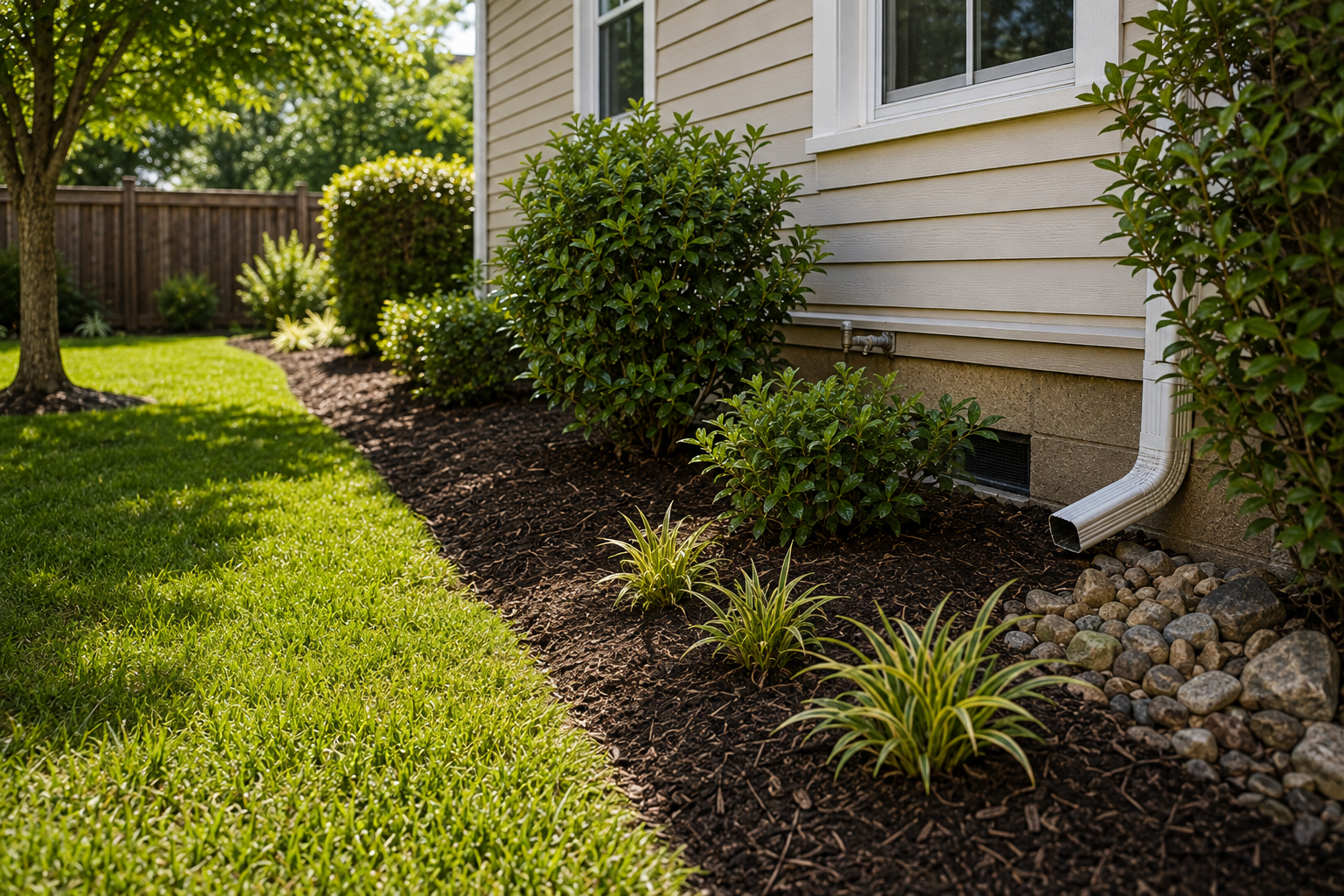
Summer landscaping affects more than curb appeal. Vegetation, mulch, irrigation, drainage, and outdoor storage can all influence how close pests get to a structure and how easily they find food, water, and shelter.
Professional pest control works more effectively when the landscape supports prevention instead of creating constant pressure around the home. Trimming plants, managing moisture, reducing debris, and keeping exterior access points visible can help limit activity from ants, cockroaches, mosquitoes, rodents, spiders, termites, and other handled pests. The goal is not to remove healthy landscaping, but to manage it so pests have fewer reasons to settle near the structure.
Keep Plants From Creating Direct Pest Pathways
Shrubs, vines, tree limbs, and dense ground cover can create protected routes toward siding, rooflines, windows, and entry points. When vegetation touches the structure, insects and rodents gain easier access while inspectors have less visibility around the foundation.
Helpful landscaping priorities include:
- Trimming shrubs away from siding and windows
- Cutting tree limbs back from rooflines
- Keeping vines from growing across exterior walls
- Reducing dense ground cover beside entry areas
- Maintaining clear space around utility penetrations
- Removing plant debris from foundation edges
These changes also help coordinate landscaping with treatment. Guidance on service coordination explains why trimming, irrigation repairs, and exterior work should be planned so they do not interfere with fresh pest-control applications or hide evidence technicians need to inspect.
Manage Mulch, Soil, And Debris Near Foundations
Mulch and landscape materials can be useful for plant health, but heavy buildup directly against a structure may create cool, protected zones where moisture lasts longer. Leaf piles, stacked wood, and unused materials can provide additional shelter.
Keeping these areas orderly makes pest activity easier to spot. Ant trails, rodent gaps, spider activity, termite risk conditions, or cockroach movement may be less obvious when the foundation edge is buried beneath clutter or dense material.
Professional inspection often focuses on the transition between landscaping and the structure because that is where outdoor pests may find their first opportunity to move indoors. Clear access also makes targeted treatment more precise and allows technicians to monitor whether activity is changing after service.
Control Irrigation And Drainage Before Moisture Builds
Summer watering can create pest pressure when irrigation repeatedly soaks foundation edges, shaded soil, or areas with poor drainage. Mosquitoes benefit from standing water, while cockroaches, ants, termites, and other pests may be drawn toward dependable moisture.
Watch for:
- Sprinklers aimed toward siding or foundation walls
- Leaking irrigation lines or hose connections
- Low spots that remain wet after watering
- Clogged gutters or downspouts draining poorly
- Mulch beds that stay saturated for long periods
- Containers or yard items that collect rainwater
Correcting these conditions supports both landscaping and pest prevention. The goal is not to keep the yard completely dry, but to avoid unnecessary water accumulation near high-risk areas.
Professional pest control can help determine which moisture zones are actually connected to activity so recommendations stay focused instead of treating every damp spot the same way.
Use Seasonal Maintenance To Reduce Recurring Pressure
Landscaping changes quickly during summer. Grass grows, shrubs thicken, irrigation schedules shift, and storms can leave debris or create new drainage problems. A yard that was low-risk in spring may develop conditions that support pests later in the season.
This is where ongoing service can add value. A service guarantee can support follow-up when pest pressure changes after treatment, giving professionals a chance to recheck activity and adjust the plan as outdoor conditions shift.
Recurring inspection also helps connect landscaping changes with new pest patterns. Increased mosquito activity may follow standing water. Ants may appear near irrigated edges. Rodents may take advantage of overgrown vegetation or storage areas. Recognizing those relationships early keeps the response more efficient.
Build Landscaping Into A Long-Term Pest Prevention Plan
Landscaping should be part of the overall pest-prevention strategy rather than treated as a separate concern. Outdoor conditions influence how often pests approach the structure, where they hide, and whether treatment areas remain accessible.
A long-term plan may include:
- Maintaining space between plants and exterior walls
- Keeping mulch and debris away from foundation edges
- Correcting irrigation leaks and drainage problems
- Reducing outdoor clutter that creates shelter
- Monitoring rooflines, vents, and utility openings
- Scheduling follow-up when seasonal activity changes
Professional pest control becomes more effective when these property conditions are managed consistently. Technicians can focus on active pest zones, confirm whether entry pressure is decreasing, and adjust treatment when weather or landscaping changes.
The strongest summer prevention plan does not depend on one-time trimming or one treatment visit. It combines healthy landscape maintenance with inspection, targeted treatment, exclusion, and follow-up. When vegetation, moisture, shelter, and access are managed together, pests have fewer opportunities to move from the yard into the home.
Make Your Landscape Part Of The Defense
If summer landscaping is creating moisture, shelter, or pest activity near your home, contact DAPS Services for professional pest control, inspection, prevention guidance, and follow-up tailored to changing property conditions.