
Commercial properties usually need pest treatment on a consistent schedule, not only when pests appear. For many businesses, monthly service is the most practical baseline because activity can build quickly around doors, drains, storage areas, kitchens, dumpsters, loading zones, offices, and exterior walls.
The right schedule depends on business type, building conditions, pest history, sanitation demands, and the surrounding environment. Pest control for a restaurant, warehouse, medical office, school, retail store, or office building should never be treated as identical. Ants, bed bugs, cockroaches, mosquitoes, rodents, wildlife, spiders, and termites all create different risks. Commercial service works best when inspections, treatment, prevention, and follow-up are matched to how the property is used.
Service Frequency Should Match Business Risk
A commercial property with food, moisture, high traffic, or stored goods usually needs more frequent service than a small office with limited activity. Pest pressure is shaped by what happens daily inside and around the building. Deliveries arrive, doors open, employees use breakrooms, trash accumulates, and landscaping or exterior lighting can draw pests closer.
Common scheduling factors include:
- Industry. Food-service, hospitality, healthcare, and storage facilities often need closer monitoring.
- Traffic. Frequent visitors, deliveries, and open doors increase pest opportunities.
- Sanitation. Kitchens, breakrooms, drains, and trash areas can support roaches, ants, rodents, and flies.
- Structure. Cracks, gaps, crawlspaces, attic spaces, and utility openings can invite pests.
- History. Properties with recurring activity often need monthly or targeted follow-up.
Monthly treatment is often recommended for businesses with steady pest pressure. Bi-monthly or quarterly service may fit lower-risk locations after conditions are stable, but that decision should follow inspection findings rather than guesswork.
Commercial Properties Need A Different Service Approach
Commercial pest control differs from residential service because the stakes, building use, and documentation needs are often higher. A business may need discreet service timing, clear reporting, employee communication, and prevention planning that support daily operations. A helpful resource on commercial differences explains why commercial environments require a more structured plan.
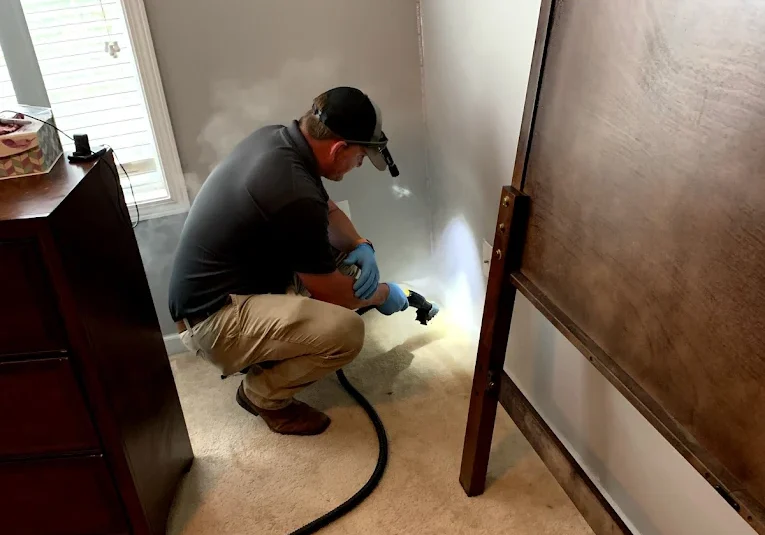
Professional service should begin with a thorough inspection of cracks, crevices, structural areas, attic spaces, entry points, and signs of pest damage. The findings help shape a property-specific schedule. For example, cockroach activity near drains may require closer monitoring than occasional spiders near an exterior storage area. Rodent evidence near loading docks may call for more frequent checks, exclusion guidance, and sanitation review.
A commercial program may include:
- Inspection. Technicians review interior and exterior areas for activity, damage, and risk points.
- Treatment. Current pest issues are addressed with targeted methods.
- Prevention. Conditions that attract pests are identified and reduced.
- Documentation. Findings and service steps are recorded for managers.
- Adjustment. Service frequency changes when pressure increases or declines.
This approach keeps service practical and accountable.
Guarantees And Follow-Up Help Maintain Protection
A commercial pest plan should not be judged by one visit alone. Pests can return when weather changes, inventory shifts, sanitation patterns change, or entry points reopen. That is why follow-up and service guarantees matter. They give the business a clearer process when activity continues between scheduled visits.
A guide on service guarantees highlights the value of plans that include ongoing support, not just one-time treatment. For commercial properties, that support helps reduce disruption and keeps pest control from becoming purely reactive.
Useful plan features include:
- Re-service. Continued activity can be checked without restarting the process from zero.
- Monitoring. Pest trends are tracked across visits.
- Communication. Managers know what was found and what needs attention.
- Prevention. Repeated issues are tied back to sanitation, moisture, access, or storage.
- Flexibility. Monthly, bi-monthly, or quarterly service can be adjusted as needed.
This is especially important for businesses facing ants, cockroaches, rodents, spiders, mosquitoes, termites, bed bugs, or wildlife activity. Each pest has different behavior, and some can spread quickly when ignored.
Consistency Reduces Recurring Commercial Pest Problems
The best treatment frequency is the one that keeps the business ahead of pest pressure. Monthly service is often the safest starting point for higher-risk commercial properties because it creates routine oversight. Bi-monthly or quarterly treatment may work when the property has fewer risk factors, strong sanitation, sealed entry points, and low pest history.
Consistent pest control helps identify patterns that one-time visits miss. If rodents appear near the same loading door, if cockroaches return near a drain, or if ants trail from the same exterior wall, those details help refine the plan. Over time, service becomes more precise because the property’s pest history is clearer.
Commercial properties should be treated often enough to prevent pests from becoming visible to employees, customers, tenants, or inspectors. Waiting until sightings increase can allow damage, contamination, complaints, or reputation concerns to grow.
Keep Business Spaces Protected Between Visits
Commercial pest treatment should be scheduled around risk, not convenience alone. A professional plan can determine whether monthly, bi-monthly, or quarterly service fits the building, pest pressure, and business operations. For dependable pest control support and long-term commercial protection, contact DAPS Services.