

Carpenter ants are among the most destructive pests that invade homes. Unlike termites, they do not eat wood for nutrition, but they hollow it out to build extensive nesting systems. Over time, this activity weakens structural supports, damages furniture, and leaves homeowners with costly repairs. Recognizing the early signs of damage and understanding treatment options is essential to protecting your property.
While spotting a few ants may seem harmless, their presence often points to larger colonies hidden inside walls, floors, or roofing materials. Because they work quietly, infestations can go unnoticed until damage becomes advanced. A professional approach to identifying and treating carpenter ant activity ensures that problems are addressed before they escalate.
Key Signs of Carpenter Ant Damage
Carpenter ants are often mistaken for other household ants, but the evidence they leave behind is distinct. Unlike termites, they do not consume wood; instead, they tunnel through it to create galleries and nesting chambers. This behavior leaves behind subtle yet recognizable clues that homeowners can learn to spot. Early identification is critical because it allows intervention before structural issues become severe.
Common signs include:
- Wood shavings: Piles of frass, resembling sawdust, often accumulate near baseboards, window frames, or under furniture. This debris is a byproduct of the ants’ excavation and sometimes contains fragments of insect parts, making it different from ordinary dust.
- Hollow sounds: When beams, joists, or wooden supports are tapped, they may produce an unusual hollow or papery echo. This is due to extensive galleries hidden beneath the surface that weaken the wood without altering its exterior appearance.
- Noisy walls: At night, when colonies are most active, faint rustling or clicking sounds may be heard inside walls or ceilings. These noises come from carpenter ants moving and chewing through wood as they expand their nests.
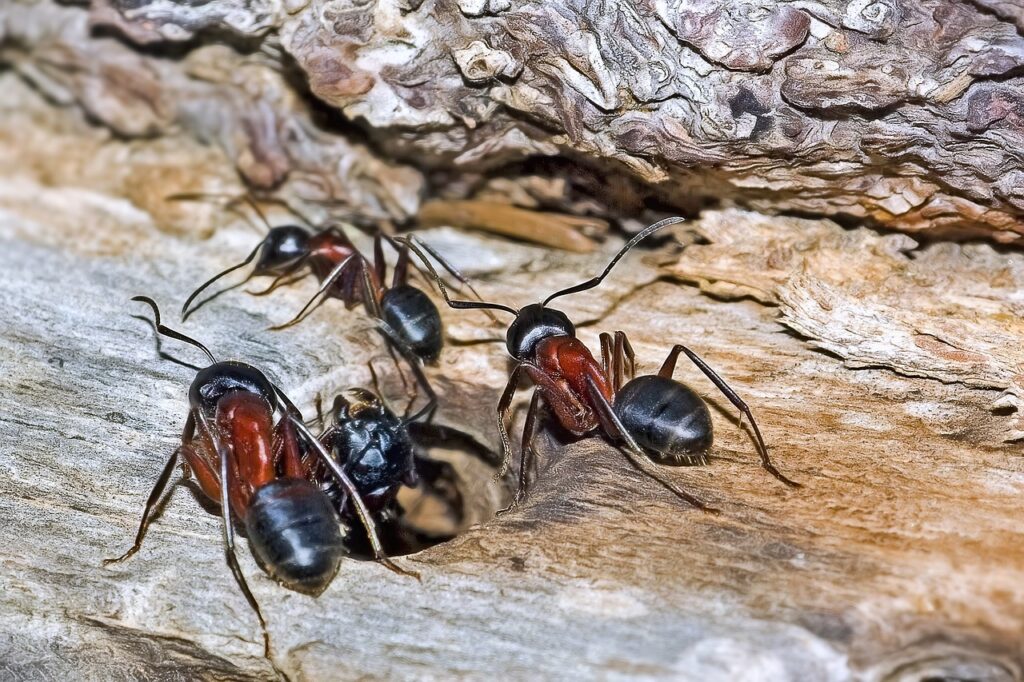
- Visible ants: Large black or reddish ants may be seen traveling in lines along walls, floors, or outdoor foundations. Unlike other species, carpenter ants are noticeably larger and often appear in small numbers at first, signaling the presence of larger colonies nearby.
In addition to these signs, homeowners may notice warped wood, sagging floors, or doors and windows that suddenly stick. These structural changes are often a result of hidden tunneling. Spotting ants in areas with consistent moisture, such as kitchens, bathrooms, or near leaky plumbing, is also a strong indication of a colony nearby.
Because carpenter ant activity often begins in damp or decaying wood, infestations can spread quietly for months before being noticed. By recognizing these indicators early and pairing them with regular inspections, property owners can prevent extensive and costly repairs.
Areas Most at Risk
Certain areas of a home are more vulnerable to carpenter ant infestations due to moisture, exposure, and structural conditions. Knowing where to look helps in detecting colonies before they grow.
High-risk areas include:
- Kitchens and bathrooms: Leaky pipes and condensation create damp wood.
- Window and door frames: Repeated exposure to rain and humidity.
- Roof eaves and siding: Vulnerable to moisture intrusion and decay.
- Basements and crawl spaces: Poor ventilation leading to damp conditions.
These areas not only attract carpenter ants but also serve as gateways for further expansion into structural beams and supports. Long-term protection often comes from consistent monitoring, which is why many homeowners find value in regular pest maintenance to reduce risks before they develop into costly repairs.
Treatment Options for Carpenter Ant Infestations
Once carpenter ants are detected, immediate action is necessary to stop the spread of colonies. Treatments focus on eliminating active infestations and preventing new ones from forming.
Effective strategies include:
- Inspection and identification: Locating the primary nest and satellite colonies hidden in walls, floors, or outdoor trees.
- Targeted treatments: Applying safe, effective methods that penetrate nests rather than surface-level sprays.
- Moisture control: Repairing leaks and improving ventilation to make environments less attractive.
- Wood replacement: Removing severely damaged materials to restore structural integrity.
Because carpenter ants are resilient and often nest in multiple locations, relying on one-time treatments is rarely effective. Professional support ensures colonies are completely removed and conditions that attracted them are corrected.
Long-Term Prevention Strategies
Carpenter ant infestations can be prevented with the right long-term measures. Prevention focuses on eliminating attractants, sealing entry points, and scheduling inspections that catch problems early.
Preventive practices include:
- Keeping firewood and debris stored away from the home.
- Sealing cracks and openings in foundations, siding, and roofing.
- Addressing water issues such as leaks, poor drainage, or clogged gutters.
- Scheduling routine inspections to monitor vulnerable areas.
For homeowners seeking consistent coverage, selecting a reliable pest control plan ensures long-term protection against carpenter ants and other destructive pests. Plans that focus on both prevention and treatment reduce the chances of recurring infestations.
Why Professional Treatment Matters
Carpenter ants are often confused with termites, but their behavior and nesting habits require very different treatment approaches. Misidentifying the problem or relying on store-bought solutions rarely resolves infestations. Without proper expertise, colonies may survive and continue spreading damage out of sight.
Professional treatment provides accurate identification, effective elimination, and long-term monitoring. It also ensures that the structural vulnerabilities attracting carpenter ants are addressed, preventing re-infestation. By combining targeted treatment with ongoing prevention, homeowners can protect both the safety and value of their property.
Safeguard Your Home from Carpenter Ants
Carpenter ants may start with small nests, but the damage they cause grows quickly if left unchecked. Protect your home’s structure and prevent costly repairs by contacting DAPS Services today for expert identification, treatment, and prevention strategies.